Optimizing Infrastructure Costs
Hourly costs are easy to understand, but companies using cloud infrastructures have to look at making a decision on when to have an on-demand instance vs agreeing to a reserved instance and committing to a time period.
The picture below shows the example of one such case illustrating the cost of a Database.
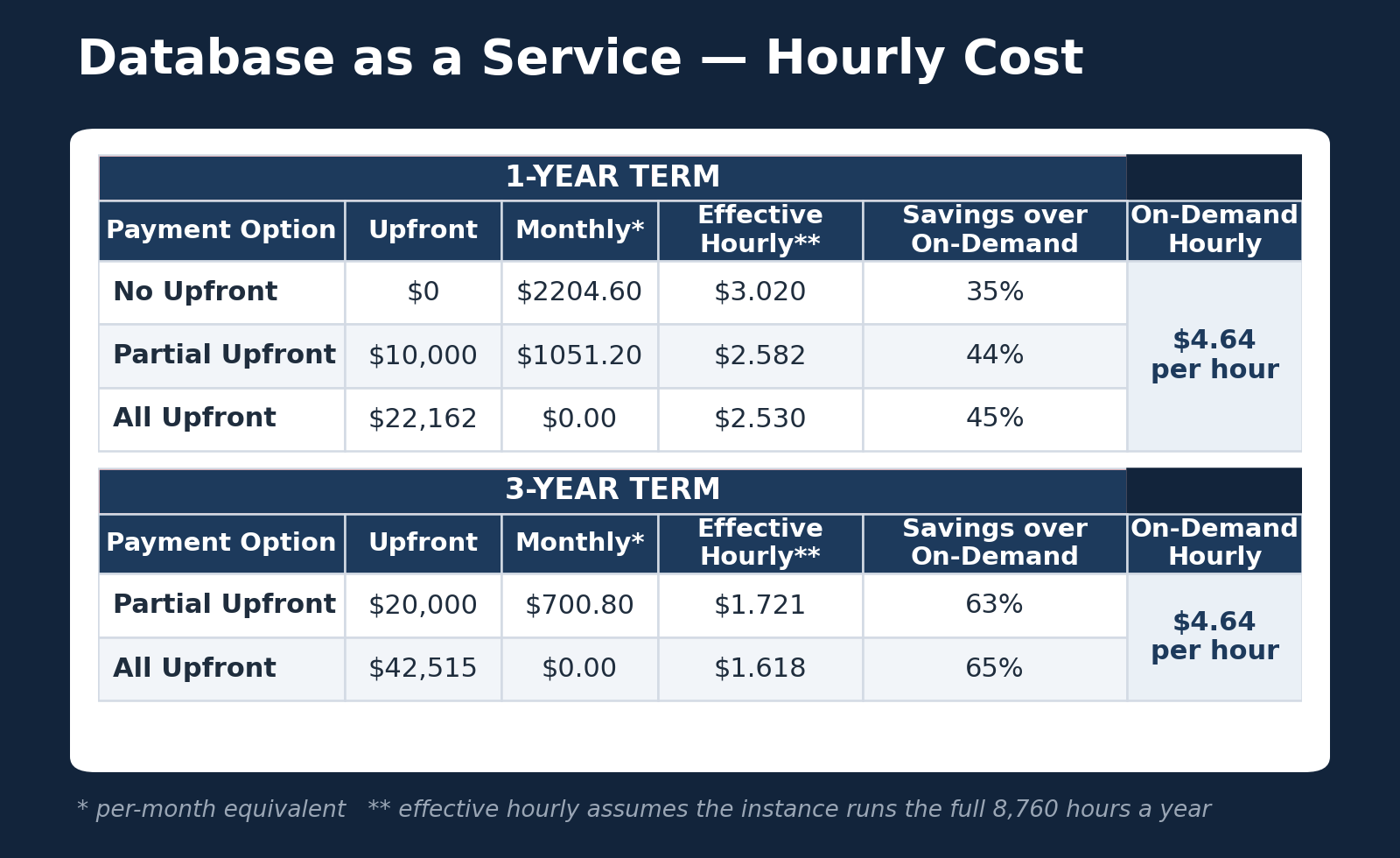
At a first glance it becomes obvious that a 3 year term has the least cost per hour with over 65% savings. However this is not as simple as that. Unlike on-demand instance pricing, reserved instance pricing is not an hourly price but more or less a yearly price or a three year price. The “effective hourly” price shown is assuming that the server runs the full 8760 hours in a year.
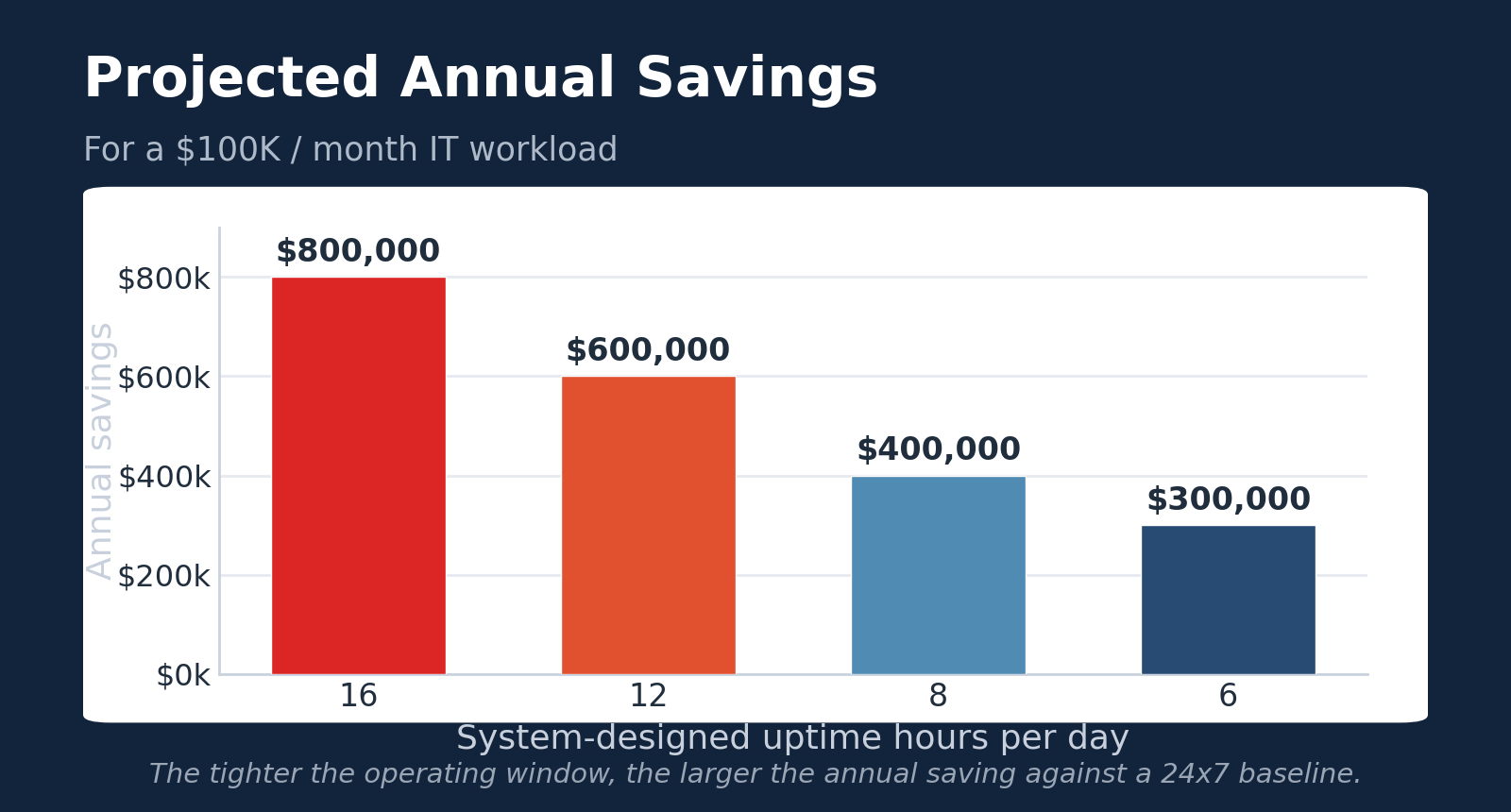
Cloud instances however can be provisioned to switch on and switch off. In-fact for most infrastructure teams, it is an unstated assumption that databases are always up and running and only brought down for maintenance reasons in short windows. With hourly pricing there is a lot of incentives to shut down the server and increase the server downtime to minimize costs. The cloud infrastructure also makes it easy to manage the down time by automatically shutting down a server and then bring it back up based on a pre-determined schedule.
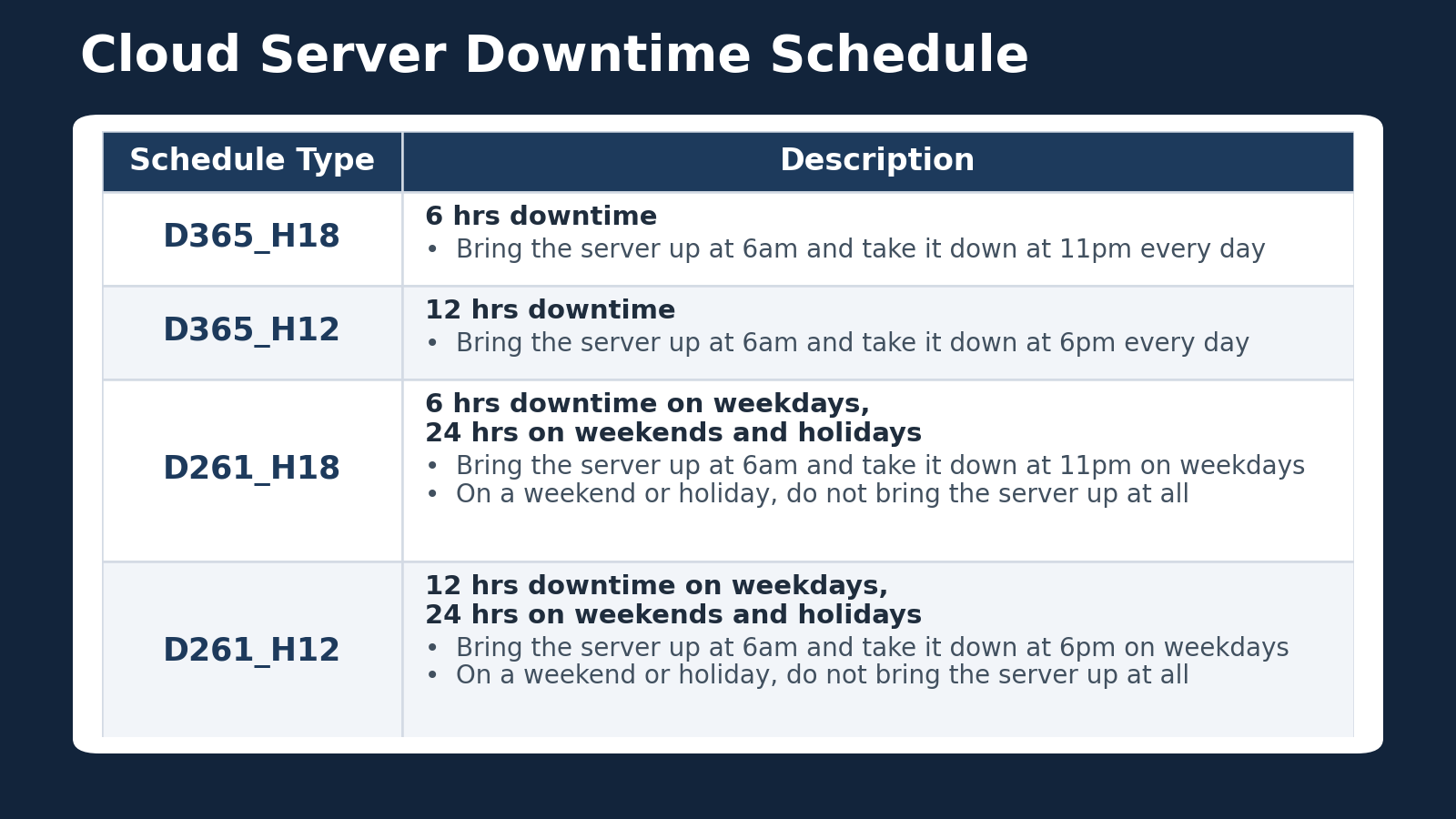
We will examine how the annual database costs change for an on-demand server if the following downtime schedules are maintained.
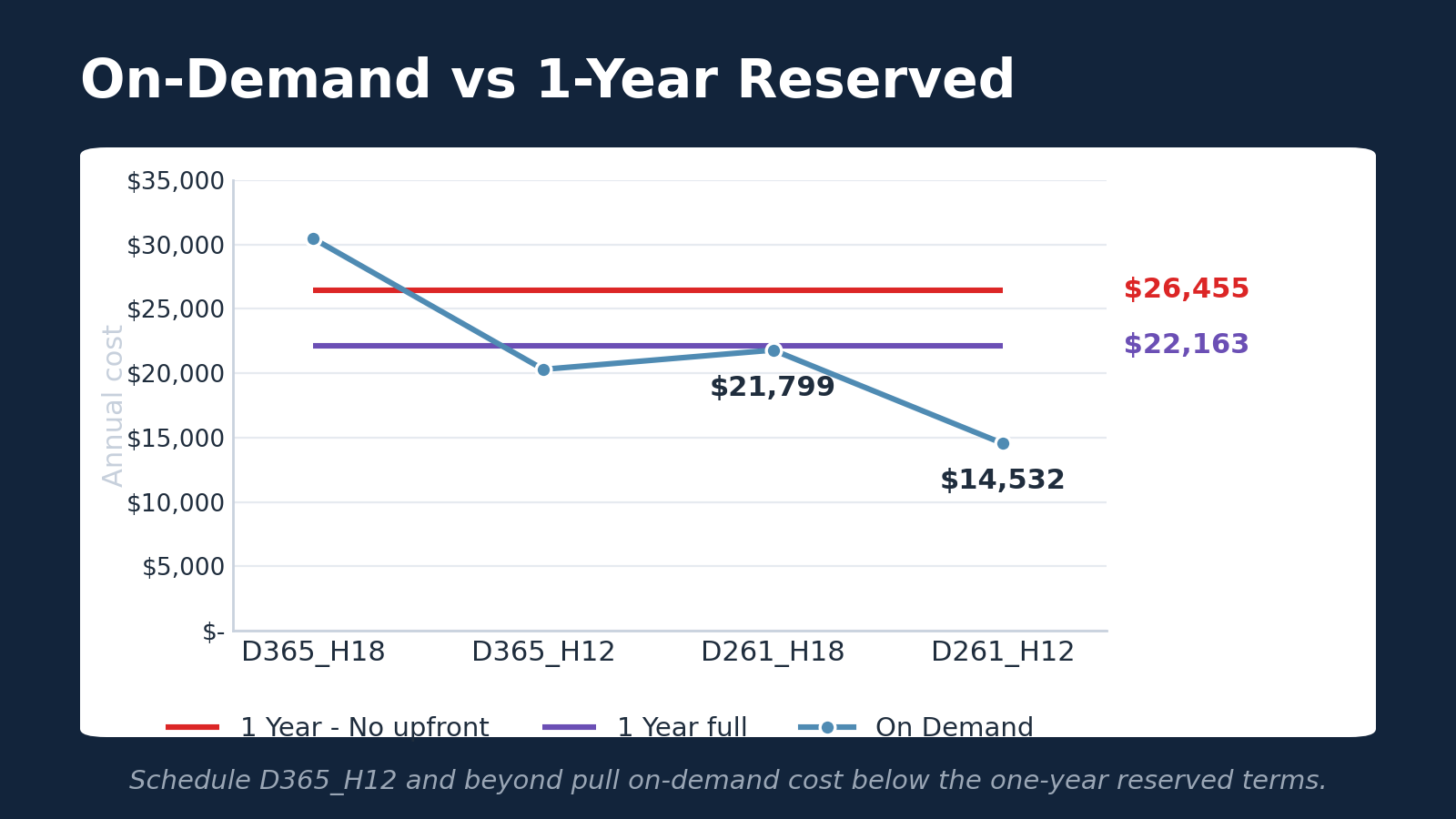
When we compare the database server on-demand costs for the different downtime schedules against a 1 year reserved instance cost we find that a downtime schedule D365_H12 or D261_H18 can reduce the cost below the 1 year reserved term.
We also find that tweaking the downtime schedule also compares very favorably to a three year term as well.
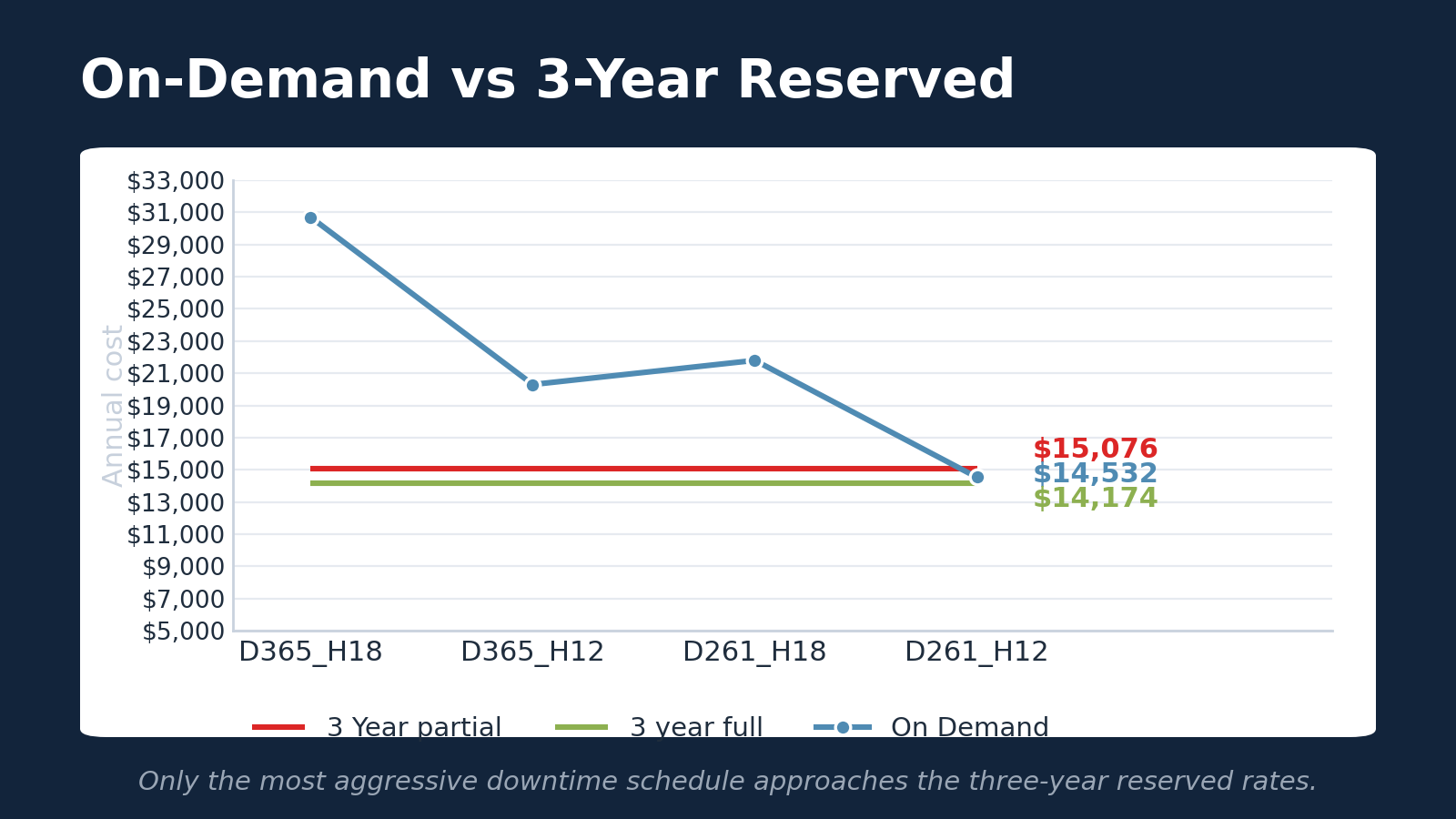
Through creative use of downtime that meets the business needs can not only reduce the costs but businesses can add more flexibility by choosing on-demand instances for their infrastructure planning.
Originally published on LinkedIn as part of the Cloud Economics series.
Ready to Transform Your Business?
Let our expert team help you implement cutting-edge solutions that drive real results.